The Only Way is Ethics: Part Two
In this new series of articles, our internal specialists discuss the ethical challenges facing the construction industry and the role competence and behaviour play in raising standards.
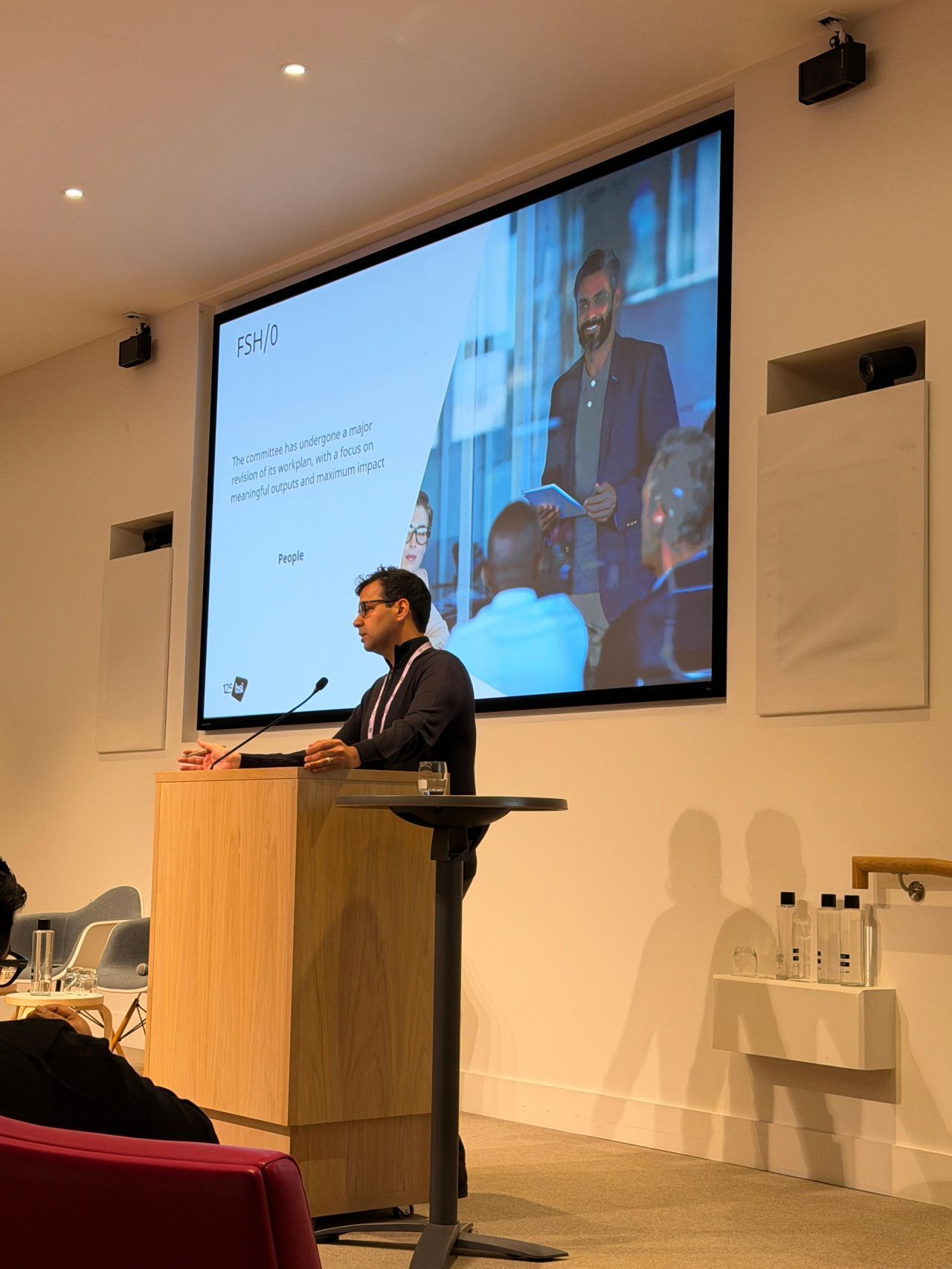
In part two, our CEO, Aman Sharma MBE, reflects on why ethical intent alone is not enough - and why behaviour, not belief, is the true test of professional competence.
Most drivers will recognise the moment immediately.
You are travelling along innocently – podcast aloud. There is a double flash in the rear view. You know exactly what has happened. You know exactly what will be landing on the doorstep in a few short days.
And yet, almost without thinking, you slow down and drive within the limit for the rest of the journey.
On the face of it, this post incident behaviour makes little sense. The offence has already occurred. The outcome cannot be undone. And yet the behaviour changes instantly. There are multiple psychological explanations for this, with the meta detail immersed in the wizardry of neurology. But a focus upon the environment shifting is appropriate to better understand the context in which decisions are made. That small, familiar moment of knowing you have been caught speeding, but slowing down anyway, captures something important about the challenge the construction industry now faces in translating ethical intent into consistent behaviour.
In the first article in this series, Colin Blatchford-Brown elegantly argued that ethics and behaviours underpin competence, and that skills, knowledge and experience are ultimately shaped by how individuals choose to act. Most professionals know what good looks like. We do not need legislation or codes of conduct to tell us right from wrong. And yet, as with the driver before the speed camera, knowing the rules does not guarantee that they are followed. Competence frameworks, as they are commonly constructed, tend to assume rational actors making conscious, deliberate choices. In reality, most decisions in construction are made under pressure, with incomplete information, competing priorities and strong social cues. Behaviour in those moments is rarely the product of ethical reflection. It is a response to context.
This is where the difficulty lies.
Within the SKEB framework, skills, knowledge and experience are relatively straightforward to evidence. We can train them, test them, log them and audit them. Behaviours, by contrast, are often treated as intangible attributes. Important? Certainly. But difficult to define, difficult to measure and therefore difficult to assure. As a result, behaviours are too often assumed rather than designed for. They are inferred from seniority, reputation or worse still - professional membership, despite widespread acknowledgement that none of these guarantees good behaviour when pressure is applied.
What happens next should not surprise us. In delivery environments where time is short, commercial tension is high and challenge is socially uncomfortable, behaviour drifts. People tend toward stretching beyond the limits of their competence, avoid escalation, normalise uncertainty or defer responsibility. Not because they are unethical, but because the system makes those responses feel safer in the moment. Behavioural science would describe this as bounded rationality. Most professionals experience it simply as “how things get done”.
The problem might be that competence frameworks tend to intervene ‘after the fact’. They assess, review and sanction once outcomes are known. This is akin to issuing a speeding ticket weeks after the journey has finished. There may be learning, but the moment of risk has already passed.
Speed cameras work not because they punish, but because they change behaviour at the point of decision. The environment reinforces compliance in real time. By contrast, behavioural expectations in construction are often implicit, inconsistently reinforced and personally costly to uphold. Saying “this exceeds my competence”, or “we need independent challenge here”, or “I am not comfortable proceeding on this basis” still too often feels risky rather than professional. If ethical behaviour is to be reliable, it must become the default response, not the exceptional one. That requires moving behaviours from the margins of competence frameworks into their operational core. Behaviours cease to be intangible when they are anchored to decisions. How uncertainty is declared, how assumptions are recorded, how often escalation occurs, how challenge is handled when pressure rises - these are all observable, repeatable actions. They are evidence of competence in practice, not abstractions of character.
This is why the reframing of competence from SKEB to BASE matters. Placing behaviours and ethics first is not symbolic. It reflects the reality that skills and knowledge are only as good as the judgement with which they are applied, and that experience only adds value where learning is enabled rather than suppressed. Professionalism, like safe driving, is not demonstrated once. It is demonstrated consistently, especially when it would be easier not to.
Which brings us back to the speed camera.
The real question for the industry is not whether our professionals are ethical. I choose to believe most are. The question is whether our delivery systems, including competence frameworks, are designed to shape behaviour at the point where it matters most. Are we relying on retrospective assurance, or are we creating environments where safe, ethical behaviour becomes unavoidable? Because once the flash has gone off, the decision has already been made.
And in safety-critical systems, that is always too late.
Aman Sharma MBE
CEO, Totus Digital